Technology
What the Lightning Network is and what its limitations are
The Lightning Network is a layer on top of Bitcoin that allows payments off the blockchain through a network of payment channels. Speed has its price: liquidity, channel management and risks that are good to know about.
The illustration contains Czech text and has not been localised.
What Lightning is for
You want to pay in bitcoin, and the recipient sends a Lightning invoice. What happens when your wallet pays it? Lightning is a second layer for Bitcoin. Individual payments update balances in payment channels off the blockchain. The Bitcoin blockchain is available to open and close channels and enforce their state when needed.
The BOLT specifications (Basis of Lightning Technology) describe how it works. They define the messages between nodes, the channel rules and how settlement works on the blockchain. The options in a particular wallet depend on the parts of the protocol it supports.
Channels
A channel connects two nodes. A funding transaction locks bitcoin in a shared output that requires both parties' signatures to spend. The nodes sign new states over time to update how the funds are divided. They revoke previous states under the protocol so that broadcasting a revoked state can be penalised.
Routing
When you have no direct channel to the recipient, your wallet looks for a route through connected nodes. Each hop uses a conditional payment with a deadline, called an HTLC. The recipient holds a secret called a preimage and provides its hash. Revealing the preimage lets the recipient claim the payment. The same value travels back along the route so forwarding nodes can claim their incoming payments. When the deadline passes, unclaimed funds can be recovered. The payment conditions are what link the channels.
Liquidity and channel limits
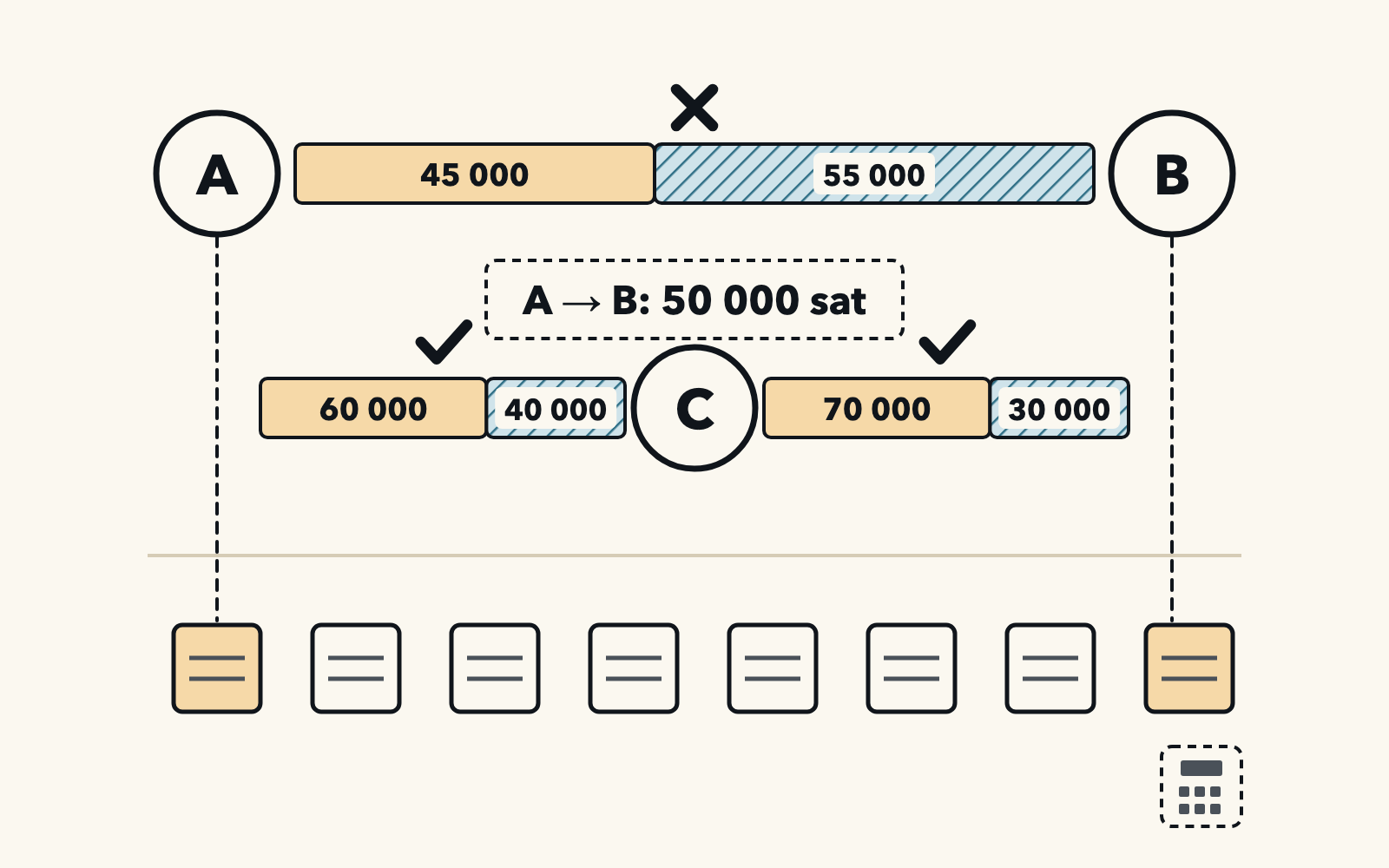
Each channel needs enough funds available in the direction of the payment. The protocol also accounts for a reserve, a minimum accepted payment and a limit on pending payments. A channel along the route can therefore cause the payment to fail even when your own wallet has enough bitcoin.
Who holds the keys
With a Lightning wallet, find out who holds the keys and who runs the service. If a provider controls the keys, you depend on it for access. The European supervisory authorities warn that consumer protection may be limited and recommend verifying that the provider's EU authorisation covers the specific service.
Risks and limitations
- Unilateral closure. A node can publish its current channel state. It then has to wait for the delay set in the channel rules before spending its main output.
- Revoked state. If a node broadcasts a previously revoked state, its peer can act in time and use the revocation key to claim the affected funds.
- Base layer. Funding and closing a channel uses Bitcoin network transactions. Disputes and pending payments can also be resolved there. Those transactions are subject to the usual fees and confirmation times.
- Complexity. The specifications require monitoring channel state and, in some situations, responding to blockchain activity in time. Check how your wallet handles backups and recovery.
Payment speed and success depend on whether your wallet can find a usable route with enough liquidity. Forwarding nodes can charge fees. Any resolution on the blockchain follows its own rules and confirmation times.