Security
How to recognise a crypto scam: warning signs and safe steps
Fraudulent investment offers often make use of cryptocurrencies. An overview of warning signs according to the Czech National Bank, the Czech Police and the European supervisory authorities, and how to deal with an offer.
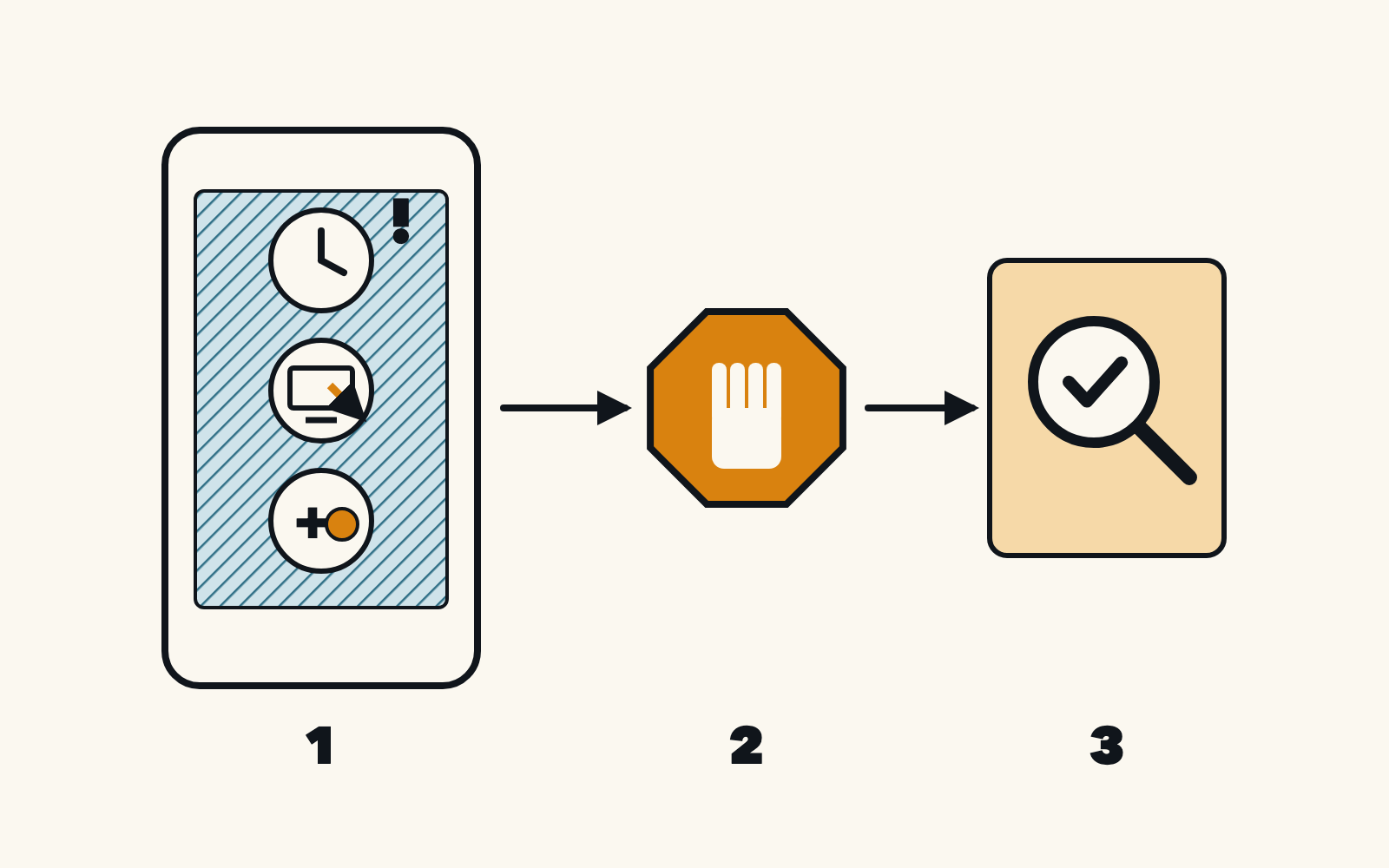
The illustration contains Czech text and has not been localised.
You come across an advert or a message on social media about a platform promising high, safe returns from cryptocurrencies. How can you tell it is a scam, and what should you do if you have already paid? We do not link to suspicious websites here, and you should not visit them, not even to check.
How a fraud usually proceeds
The Czech Police (Policie ČR) describe investment fraud as a sophisticated scam in which the perpetrator offers to grow your money through fake investment projects, platforms or advisers. A real investment almost never takes place, and the money goes “straight to the attacker's account”. The offer may arrive through online advertising, social media, a phone call, text message, email, investment apps or fake web platforms. According to the police, it most often involves cryptocurrencies, but also shares in well-known companies, commodities, forex or “guaranteed” funds.
According to the police, the fraud usually unfolds step by step. The victim invests repeatedly and may at first be reassured by being allowed to withdraw part of the supposed profits. The platform then shows growing balances that do not actually exist. When the victim wants to withdraw their deposits and profits, it is not possible, and they are instead pushed into making further deposits. On the same undated page, the police state that in a typical investment scam the average loss per victim is CZK 300,000. The page gives neither the period nor how the average was calculated, and the figure does not apply to all crypto scams.
Warning signs
- A promise of high or “risk-free” profit. The Czech National Bank (ČNB) urges people not to fall for unrealistic promises of high profits. If the available information does not let you assess the level of risk, the ČNB says you should treat that as a warning sign.
- “Artificial intelligence” as the reason for the return. On 12 March 2026 the ČNB warned about fraudulent platforms promising high, risk-free profits from trading cryptocurrencies with the help of “artificial intelligence”. According to the ČNB, these entities have no ČNB authorisation to provide services on the financial market in the Czech Republic. This does not mean that every service mentioning artificial intelligence is unauthorised.
- Frequent changes of name and website. According to the ČNB, such schemes typically change their name, brand or web address quickly to make themselves harder to identify. The same offer therefore turns up under different names on different websites.
- Pressure and advertising on social networks. The ČNB advises against giving in to pressure or to advertising on social media; neither an influencer nor an advert, it says, guarantees trustworthiness. The European supervisory authorities warn about aggressive promotion of crypto-assets, especially on social media, where influencers may be paid to advertise. Fraudsters may also claim to be authorised when they are not.
- Inability to withdraw. If you cannot withdraw your money and the platform asks you for further deposits, this matches the pattern described by the police. Do not send any more money.
What you can do before any deposit
- Check the provider. For services in Czechia, use the Czech National Bank’s lists and the ESMA register. Check that the authorisation covers the specific service you plan to use. A provider authorised in another EU country may provide that service in Czechia if it meets the rules for cross-border provision.
- Do not give in to pressure. Take time to think it over, even if someone tells you the offer will end soon.
- Do not open links from unsolicited messages. Look up the service yourself from a trustworthy source. A link from an advert, a text message or a stranger's message may lead to a fake website. This is our general advice; the sources state that scams arrive through these channels, and the European supervisory authorities also warn about malicious links.
- Protect your wallet access details. The ČNB points out that losing access details or having them stolen can mean the irreversible loss of your crypto-assets. So never share your recovery phrase or passwords with anyone, including “support”.
What to do if you have already paid
If you suspect fraud, the Czech National Bank advises contacting the Czech Police. Keep the messages, payment records and website addresses. Avoid reopening suspicious sites. The police warn that a second scam may follow the first, with someone offering to get your money back. Ignore the offer and stop sending money.
Sources (checked 24 October 2026)
- Policie ČR (Czech Police): Frauds with the legend of a profitable investment (Podvody s legendou výhodné investice)
- Czech National Bank (Česká národní banka): Warning about fraudulent platforms offering cryptocurrency trading with the help of “artificial intelligence” (12 March 2026)
- Czech National Bank (Česká národní banka): what you should watch out for before investing in crypto-assets (Na co byste si měli dát pozor před investováním do kryptoaktiv)
- ESMA, EBA, EIOPA: Warning on crypto-assets (6 October 2025)
- ESMA, EBA, EIOPA: Warning on crypto-assets, full text (PDF, 2025; added 29 October 2026)